


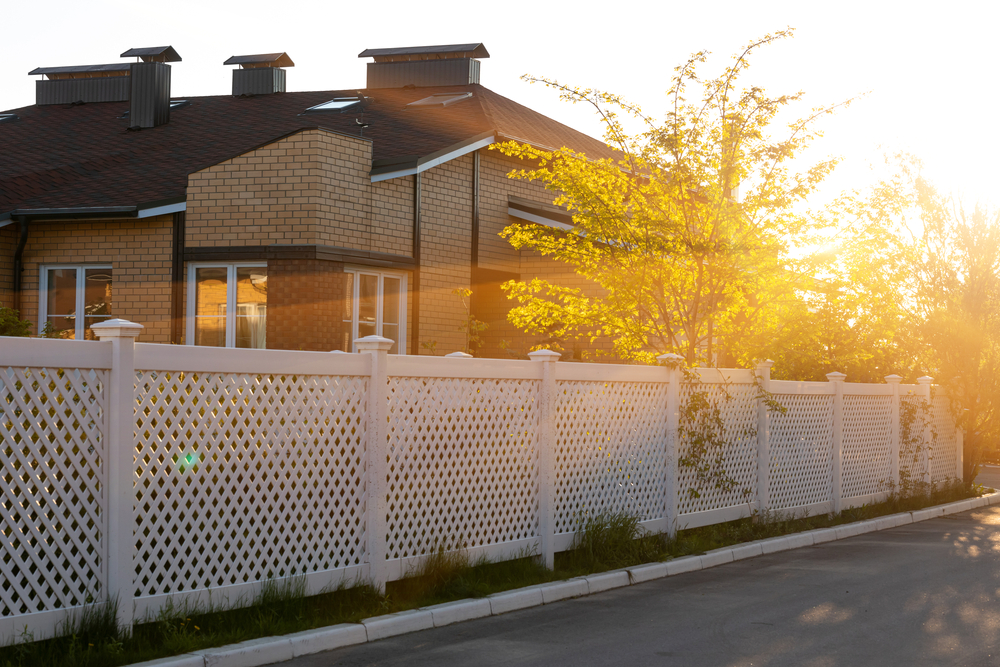
Installing a new vinyl fence in a Santa Clarita neighborhood can improve privacy, define property boundaries, and refresh your home’s appearance. However, homeowners in HOA-managed communities may need approval before replacing an existing fence or installing a new one. Even a fence that looks similar to neighboring properties may not meet your association’s current requirements.
Quick Answer: Santa Clarita homeowners associations commonly regulate vinyl fence height, color, style, placement, and visibility from shared streets or neighboring properties. Many associations require homeowners to submit an architectural application with fence specifications, measurements, and property plans before installation. Exact requirements vary by community, and HOA approval does not replace any applicable city permits or building code requirements.
What local homeowners should know
-
HOA architectural approval may be required before installing or replacing a vinyl fence, even when the replacement follows an existing fence line.
-
Communities in Valencia and Stevenson Ranch may have different architectural standards depending on the specific association and development.
-
Fence height, color, privacy panel design, and placement are common elements reviewed by HOA architectural committees.
-
Santa Clarita’s hillside lots and sloped properties can complicate fence height measurements and installation planning.
-
Written HOA approval should be obtained before purchasing materials or scheduling installation.
Why HOA Fence Requirements Matter in Santa Clarita
HOA fence requirements in Santa Clarita help maintain consistent neighborhood appearances, protect shared property interests, and regulate changes that may affect neighboring homes. These rules can be particularly significant in master-planned communities where architectural standards are part of the neighborhood’s original design.
Residential developments throughout Valencia, Saugus, Canyon Country, and Newhall include properties with different lot configurations, fence arrangements, and architectural styles.
Some homes have backyard fencing that is largely hidden from public streets. Others have corner lots, elevated yards, or side fences visible from neighborhood sidewalks.
Those differences can affect what an association allows.
A privacy fence that is acceptable behind one home might require a different design along a street-facing property line.
At Vinyl Professionals, Inc., we understand why homeowners want to clarify these requirements before starting a vinyl fencing project. Planning around HOA guidelines from the beginning can help homeowners avoid unnecessary design changes and approval delays.
Common HOA Requirements for Vinyl Fence Height, Color, and Style
Common HOA requirements for new vinyl fences include restrictions on fence height, approved colors, panel styles, decorative features, and installation locations. Each association establishes its own architectural standards, so homeowners should confirm the rules that apply to their specific property before selecting materials.
Fence Height Restrictions
HOAs may establish different maximum heights for backyard, side-yard, and front-yard fences.
A community might permit taller privacy fencing in a rear yard while limiting fence height near sidewalks, driveways, or intersections.
For homes built on slopes, the association may specify how fence height must be measured.
Homeowners should also verify applicable City of Santa Clarita zoning and building requirements, since municipal rules and HOA standards are separate.
Approved Vinyl Fence Colors
White vinyl fencing is a familiar residential option, but that does not mean every association automatically approves it.
Depending on the community, permitted colors might include:
-
White
-
Tan
-
Beige
-
Other neutral shades specifically listed in the HOA guidelines
These are examples of possible options, not a verified approved-color list for any particular association.
Some communities may require fencing to match existing neighborhood features or adjacent installations.
Privacy and Decorative Fence Styles
HOAs may distinguish between full-privacy fencing, semi-privacy fencing, picket designs, and decorative fence tops.
For example, a solid privacy fence may be acceptable along a rear boundary but restricted near a front-facing side yard.
Decorative lattice, contrasting post caps, and other visible design details may require separate review.
The safest approach is to submit the exact proposed fence design rather than assuming that all vinyl styles are interchangeable.
Local Data or Field Observations: Why Property Layout Matters
Property layout matters because Santa Clarita’s mix of hillside developments, planned subdivisions, and established residential neighborhoods creates different fence installation challenges. Lot elevation, retaining walls, shared boundaries, and street visibility can all influence how a proposed vinyl fence is evaluated.
The following are practical planning observations, not findings from a specific HOA survey.
In hillside areas around Stevenson Ranch and parts of Canyon Country, a fence may cross changing elevations or sit near an existing retaining wall.
In planned neighborhoods around Valencia, architectural consistency may be a major consideration when reviewing visible fence improvements.
Older residential areas of Newhall and Saugus may contain existing fences that were installed under earlier standards or before an association adopted updated guidelines.
Homeowners should not assume that an older neighboring fence establishes what their HOA will approve today.
How HOA Rules Affect Local Vinyl Fence Projects
HOA rules affect local vinyl fence projects by influencing material selection, project scheduling, installation locations, and the final appearance of the fence. Approval requirements can also determine whether homeowners need to revise a design before installation begins.
For Los Angeles County homeowners living in HOA-managed communities, the most common practical concerns include:
Project timing: Architectural review may add time before installation can begin.
Material selection: A preferred color or panel design might not appear on the association’s approved list.
Boundary coordination: Shared fences may involve neighboring owners, especially when an existing fence separates two residential lots.
Installation costs: Changing an already purchased design can create additional expenses.
Long-term compliance: Installing a fence without required approval may lead to association enforcement or modification requests.
Checking the rules early is generally easier than addressing compliance concerns after construction.
Warning Signs Your Vinyl Fence Plan May Not Meet HOA Requirements
A proposed vinyl fence may face HOA approval problems when its height, appearance, placement, or documentation conflicts with the association’s architectural standards. Before ordering materials, Santa Clarita homeowners should watch for these seven warning signs:
-
No written approval: You have discussed the fence informally but have not received formal architectural authorization.
-
Unverified color: The proposed vinyl color is not specifically identified in the community’s approved materials or written approval.
-
Different fence height: Your proposed fence is taller than nearby installations or exceeds a stated association limit.
-
Street-facing placement: The fence will be visible from a public street, common area, or neighborhood entrance.
-
Retaining wall installation: The fence will sit on or near a retaining wall without confirmed structural and height requirements.
-
Unclear property boundary: The proposed fence line has not been verified against available property documentation.
-
Missing design details: Your HOA application does not include the panel style, measurements, location, or other requested specifications.
Any of these issues should be resolved before installation.
When to Call a Professional for HOA-Compliant Vinyl Fencing
Homeowners should consult a vinyl fencing professional when their project involves complex measurements, sloped terrain, fence replacement, or HOA design requirements that affect material selection. Professional input is especially useful before submitting an architectural application that requires detailed fence specifications.
You can review HOA documents, compare approved styles, and gather basic property information yourself.
However, projects involving retaining walls, unusual grading, difficult access, or uncertain fence placement may require additional evaluation.
A fencing contractor can help explain available materials and installation considerations. Property line disputes may require a licensed surveyor, while structural or permit questions should be directed to the appropriate qualified professional or local authority.
Common Reasons Vinyl Fence Applications Get Delayed
Vinyl fence applications can be delayed when homeowners submit incomplete plans, overlook architectural restrictions, or assume that an existing fence establishes automatic approval. These problems can arise across HOA-managed neighborhoods in the Santa Clarita Valley.
The most important causes to address are:
1. Incomplete architectural applications
Some associations request a site plan, fence elevations, product specifications, color samples, and photographs.
Leaving out required information can delay review.
2. Unapproved materials or colors
Selecting a vinyl product before checking the architectural guidelines can result in a required redesign.
3. Incorrect height measurements
Sloped yards can create confusion about whether height is measured from existing grade, finished grade, or another specified reference point.
4. Shared fence concerns
Replacing a boundary fence may require coordination with an adjacent property owner.
5. Confusion between HOA approval and city requirements
An association’s authorization does not establish that a project complies with all municipal rules.
How to Prepare for HOA Approval Before Installation
Preparing for HOA approval involves reviewing your community’s governing documents, choosing a compliant fence design, and submitting the information required by the architectural review committee. Completing these steps before installation helps reduce avoidable revisions and scheduling problems.
Use this homeowner checklist:
-
Obtain the current architectural guidelines and applicable CC&Rs.
-
Confirm whether vinyl fencing is permitted in the proposed location.
-
Check approved heights, colors, panel styles, and decorative features.
-
Measure the planned fence length and identify gates or changes in elevation.
-
Prepare a property plan showing the proposed fence location.
-
Gather product descriptions, drawings, and color information.
-
Ask whether neighboring homeowner acknowledgment is required.
-
Submit the application and wait for written approval.
-
Verify any applicable city permit or zoning requirements.
-
Keep the approval documents for future reference.
Fall and winter can be useful planning periods for homeowners who want to complete the approval process before a spring or summer outdoor improvement project.
What to Expect After Your HOA Approves a Vinyl Fence
After HOA approval, homeowners can move toward installation using the approved fence specifications, subject to any additional permit, property line, or construction requirements. The completed fence should match the authorized design, including its height, color, location, and visible features.
Vinyl fencing can offer several practical benefits for homes in the Santa Clarita Valley.
Unlike wood, vinyl does not require routine painting or staining. It also does not experience wood rot, although it still needs cleaning, inspection, and occasional repairs.
A properly selected and installed vinyl fence can improve privacy, create a defined yard boundary, and complement surrounding residential architecture.
Actual performance depends on product quality, installation methods, exposure, and ongoing maintenance.
Common Mistakes Santa Clarita Homeowners Should Avoid
The most common HOA fencing mistakes involve making design or purchasing decisions before confirming association requirements. These errors can lead to rejected applications, project delays, or modifications after installation.
| Mistake | Possible consequence | Better approach |
|---|---|---|
| Ordering materials before approval | Unusable materials or added costs | Obtain written approval first |
| Copying a neighbor’s fence | Design may not meet current rules | Check your property’s guidelines |
| Ignoring slope changes | Incorrect height or panel layout | Confirm measurement requirements |
| Assuming a replacement needs no review | Possible HOA violation | Verify replacement procedures |
| Overlooking city regulations | Permit or code complications | Check municipal requirements separately |
A few early questions can prevent more complicated problems later.
Common Local Scenario: Replacing an Aging Backyard Fence
A common local scenario involves a homeowner in Valencia who wants to replace an aging wood privacy fence with a low-maintenance vinyl alternative. Although the existing fence has been in place for years, the homeowner’s association may still require an architectural application before replacement.
The homeowner prefers a solid white vinyl design with a similar height and layout.
Before moving forward, the homeowner checks whether the association permits vinyl, whether white is approved, and whether the proposed height meets current standards.
The application includes the planned fence location, material details, and design specifications.
Once the required approvals and any applicable municipal requirements are addressed, the homeowner can proceed with a clearer installation plan.
This is an illustrative scenario, not a documented customer project.
Vinyl Fence Solutions for HOA-Managed Properties
Vinyl fence solutions for HOA-managed properties include privacy panels, semi-privacy designs, picket fencing, and matching gates, provided the specific products and layouts meet association requirements. The appropriate choice depends on the homeowner’s goals and the architectural standards governing the property.
A full-privacy fence may work well for a backyard where screening is permitted.
Semi-privacy panels can provide partial separation while allowing some visibility or airflow.
Picket fencing may suit decorative boundaries in locations where taller solid panels are restricted.
Matching vinyl gates can help maintain a consistent appearance across the installation.
We can help homeowners explore vinyl fencing options based on their property’s layout and intended use, while the HOA retains responsibility for its architectural approval decisions.
Comparing Vinyl Fence Options for Your Property
Comparing vinyl fence options means balancing privacy, appearance, maintenance, and HOA restrictions before choosing a design. Homeowners should focus on what their association permits rather than selecting a style based only on appearance.
| Fence option | Primary benefit | HOA consideration |
|---|---|---|
| Full-privacy vinyl | Screens backyard activity | Height and solid-panel restrictions |
| Semi-privacy vinyl | Provides partial screening | Approved openings and design |
| Vinyl picket | Decorative boundary | Placement and picket specifications |
| Vinyl with lattice top | Adds decorative detail | Overall height and approved trim |
| Matching vinyl gate | Provides yard access | Gate height, location, and appearance |
DIY planning can be useful for reviewing rules and identifying preferences. Professional installation may be more appropriate when the project requires precise alignment, complex grading, or coordinated gate installation.
Vinyl Fencing Service Areas Around Santa Clarita
Homeowners considering vinyl fencing in Santa Clarita may encounter different HOA requirements across Valencia, Saugus, Canyon Country, and Newhall. Nearby Stevenson Ranch and Castaic also contain residential communities where association rules may influence fence improvements.
We encourage property owners throughout the Santa Clarita Valley to verify their community’s requirements before finalizing a fencing design.
The Cost of Ignoring HOA Fence Requirements
Ignoring HOA fence requirements can create unnecessary costs if an association requires changes to an unauthorized installation. The financial impact depends on the governing documents, the nature of the violation, and the corrective work involved.
Possible consequences include architectural review disputes, installation delays, replacement materials, and removal or modification expenses.
Some associations also have enforcement procedures and monetary penalties, subject to applicable law and their governing documents.
Confirming approval before construction is a practical way to reduce these risks.
Frequently Asked Questions About Santa Clarita HOA Vinyl Fences
Do I need HOA approval to install a vinyl fence in Santa Clarita?
Many HOA-managed communities require architectural approval before a new vinyl fence is installed. Requirements vary by association and may also apply to replacing an existing fence. Review your current CC&Rs and architectural guidelines, submit the required application, and obtain written authorization before beginning construction.
What vinyl fence colors are allowed by Santa Clarita HOAs?
Allowed vinyl fence colors depend on the individual HOA’s architectural standards. White, tan, and other neutral shades may be available options, but none should be assumed approved without confirmation. Request the association’s current color requirements and submit the exact proposed product color for review.
How tall can an HOA-approved vinyl fence be?
The permitted height depends on the HOA’s rules, the fence location, and applicable municipal regulations. Backyard fences may be treated differently from front-yard or street-facing fences. For sloped properties, confirm the required height measurement method before selecting panels or planning post locations.
Can I replace my existing wood fence with vinyl in Valencia?
You may be able to replace a wood fence with vinyl in Valencia if your HOA permits the proposed material and design. Replacement does not necessarily qualify for automatic approval. Confirm whether an architectural application is required, particularly if the new fence changes color, height, appearance, or location.
Does the City of Santa Clarita require a permit for a vinyl fence?
Permit requirements depend on the fence’s location, height, design, and construction conditions. Certain fencing work may be exempt from a building permit while still being subject to zoning, visibility, or other requirements. Contact the City of Santa Clarita’s Building and Safety Division to verify what applies to your project.
Can I install a vinyl fence on a retaining wall in Stevenson Ranch?
A vinyl fence may be possible near or on a retaining wall, but the installation requires careful review of structural conditions, applicable regulations, and HOA standards. Fence loads, attachment methods, and combined height restrictions can matter. Have the proposed installation evaluated before assuming a retaining wall can support the fence.
How long does HOA approval take for a new vinyl fence?
HOA approval timelines vary by association, application completeness, and architectural review procedures. Some committees meet on established schedules, while others use different review processes. Ask your management company about submission deadlines, required documentation, and the expected decision timeline before scheduling installation or purchasing materials.
Can my HOA reject a vinyl privacy fence in Canyon Country?
An HOA may reject a proposed vinyl privacy fence if it conflicts with applicable architectural restrictions or governing documents. Potential issues include excessive height, an unapproved color, prohibited solid panels, or placement in a restricted area. Request the reason for rejection and review available revision or appeal procedures.
Are vinyl fences suitable for Santa Clarita’s hot summers?
Vinyl fencing can be suitable for the area’s hot, sunny conditions when the product is designed for outdoor exposure and installed appropriately. Heat can cause expansion, and prolonged sunlight may affect appearance or performance over time. Select suitable materials and follow the manufacturer’s installation and maintenance requirements.
What documents should I submit for HOA vinyl fence approval?
Typical documents may include an architectural application, property or site plan, fence measurements, panel specifications, color information, and photographs. Some associations also request neighbor acknowledgment or additional drawings. Use your community’s current submission checklist, since requirements vary across HOA-managed neighborhoods in Los Angeles County.
Plan Your New Vinyl Fence With HOA Requirements in Mind
A successful vinyl fencing project starts with understanding the rules that apply to your property. For homeowners in HOA-managed neighborhoods, confirming approved materials, dimensions, and placement before installation can help prevent delays and unnecessary expenses.
We believe homeowners should be able to explore practical fencing options with a clear understanding of their property’s needs and approval requirements.
Get a Vinyl Fence That Fits Your Home and HOA Guidelines
Make your next fence improvement easier to plan by reviewing the right vinyl options before installation begins.